

How to Prepare a Matter Handover
Give the next reviewer the matter position, people, evidence, open questions, recent changes and owned next steps. Includes a Word template and example.
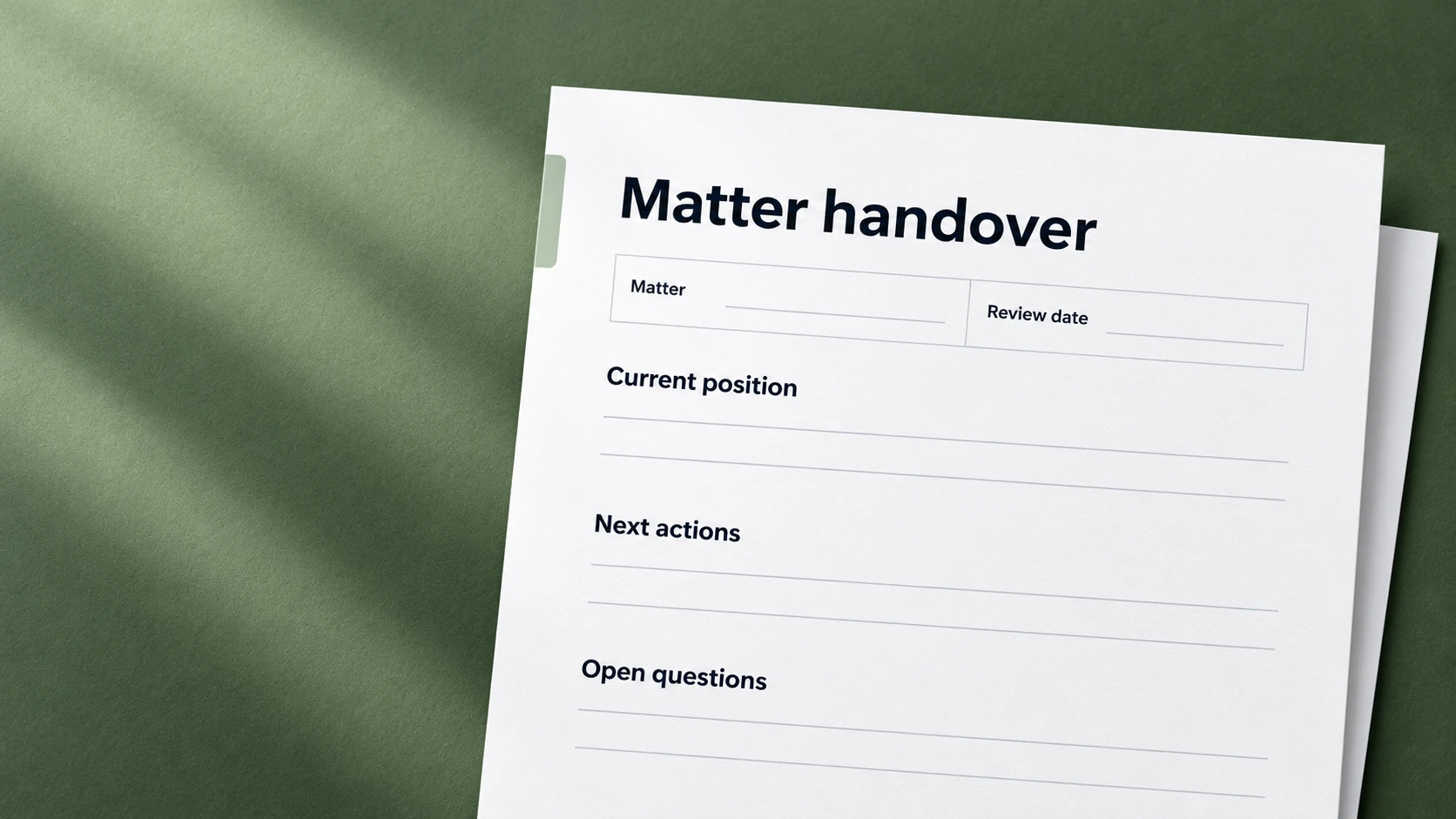
A matter handover should let the next person understand the current position, find the supporting record and take the next action. A long history without owners, open questions or a reliable as-of date leaves the recipient to rebuild the file.
Finish with a handover that states the current position, links the key records and gives each outstanding action an owner. The working kit includes an editable Word template, a completed example, a drafting prompt and fictional sources.
Use this guide for an active matter changing reviewer or responsibility. Client engagement, transfer authority, confidentiality, conflicts and local professional obligations need the firm's separate checks. The template does not authorise a transfer or replace those checks.
State the purpose and current position first
Name the matter, recipient, outgoing owner and incoming owner. Record the handover date, source-set version and what the recipient is being asked to do. A reviewer joining for one brief needs a different scope from a lawyer taking responsibility for the whole matter.
Write a short current-position paragraph. Include the stage of the matter, the next decision, what has been reviewed and what remains uncertain. Describe an allegation as an allegation. Keep proposed strategy or legal assessment visibly separate from the factual account.
If procedural dates matter, link to the actual order, service record or other controlling material and identify who verified the date. “No deadline found in this packet” is a collection limitation. It is not confirmation that there is no deadline.
Map the people and responsibilities
Identify the client contact, responsible lawyer, reviewing lawyer, operational owners and relevant witnesses or counterparties. State each person's role rather than relying on a name alone. Include access or availability issues only where the recipient needs them.
Assign each next action to one owner. Avoid “team to review”. Where an action depends on another task, name the dependency and who will confirm it. Do not place sensitive contact details in a broadly shared template or downloadable example.
Link the evidence instead of copying the whole file
Give the recipient a source inventory, an issue list, the current chronology and an evidence matrix. Use stable references and exact source pinpoints for facts that drive the next decision.
The handover should explain why the key documents matter. It should also identify missing attachments, incomplete agreement extracts, unclear authorship or opposing accounts that have not been checked. A list of filenames without those limits can suggest a level of review that never happened.
Summarise competing accounts beside one another. Do not hand over only the current preferred narrative. The incoming reviewer needs to know what could change it and which questions still require legal judgment.
Show what changed recently
Record the material added since the last review and the propositions or work products it affects. Link to the change register. State whether the recipient must review a proposed correction, confirm an accepted change or revisit a legal assessment.
An AI-generated summary can help prepare a starting draft, but the outgoing reviewer must inspect the factual account and the limits being handed over. Review responsibility is not transferred to the tool. 1
Use the synthetic example as a model
The completed handover concerns the fictional Northline equipment review as of 5 May 2026. No court proceeding, legal deadline or liability finding is supplied. The recipient is asked to resolve delivery timing and quantity before reviewing a draft brief. The equipment record is a connected running example across this library. Reusing it lets you follow the same sources through different review tasks. Apply the source and review checks to the records in your own matter.
Its current position states that the agreement extract records a 30 April warehouse delivery term (DOC-001 L04). Sales says all 12 pilot units arrived on that date (DOC-006 L03). Warehouse and unpacking records do not confirm that account: DOC-003 counts cartons, and DOC-005 says two units on the floor came from another order.
The handover calls out the new carrier export. It records a depot scan at 23:15 on 30 April with no recipient signature (DOC-007 L02–L04). The recipient is not asked to replace the warehouse receipt date with the scan date. They are asked to reconcile the records and obtain the signed consignment note.
The fictional action owner must also obtain the full executed agreement and any signed variations. The receiving reviewer must confirm they can open the supplied records and know which work is still unreviewed. Fictional role names in the example are placeholders for real assignments, not evidence of a customer process.
Draft a handover from reviewed material
Close the handover loop
Review the template with the incoming person. Confirm they have the correct source set, access to the key documents and a clear understanding of outstanding actions. Record receipt, the responsibility change and any questions raised. Save those decisions in the matter's normal record.
Check that the version being handed over is the same version the recipient will use. If material arrives during the transition, record who handles it. A handover is not finished because a document was sent; the recipient must have an actionable starting point.
The working kit
Download a neutral Word handover template, a completed synthetic handover, a drafting prompt and the source packet. The template covers the full matter position. The existing chronology kit remains useful for handing over the chronology itself.
Keep the next piece of work connected
Use the source-linked brief template when the next task is a focused analysis for a particular reader. Keep the handover for continuity and responsibility. Contact Grella to see how source material, reviewed facts and work products fit together.