

eDiscovery vs Case Analysis: Where Each Fits
Understand how eDiscovery and case analysis work together, preserve source references between systems and assess where a matter workspace fits.
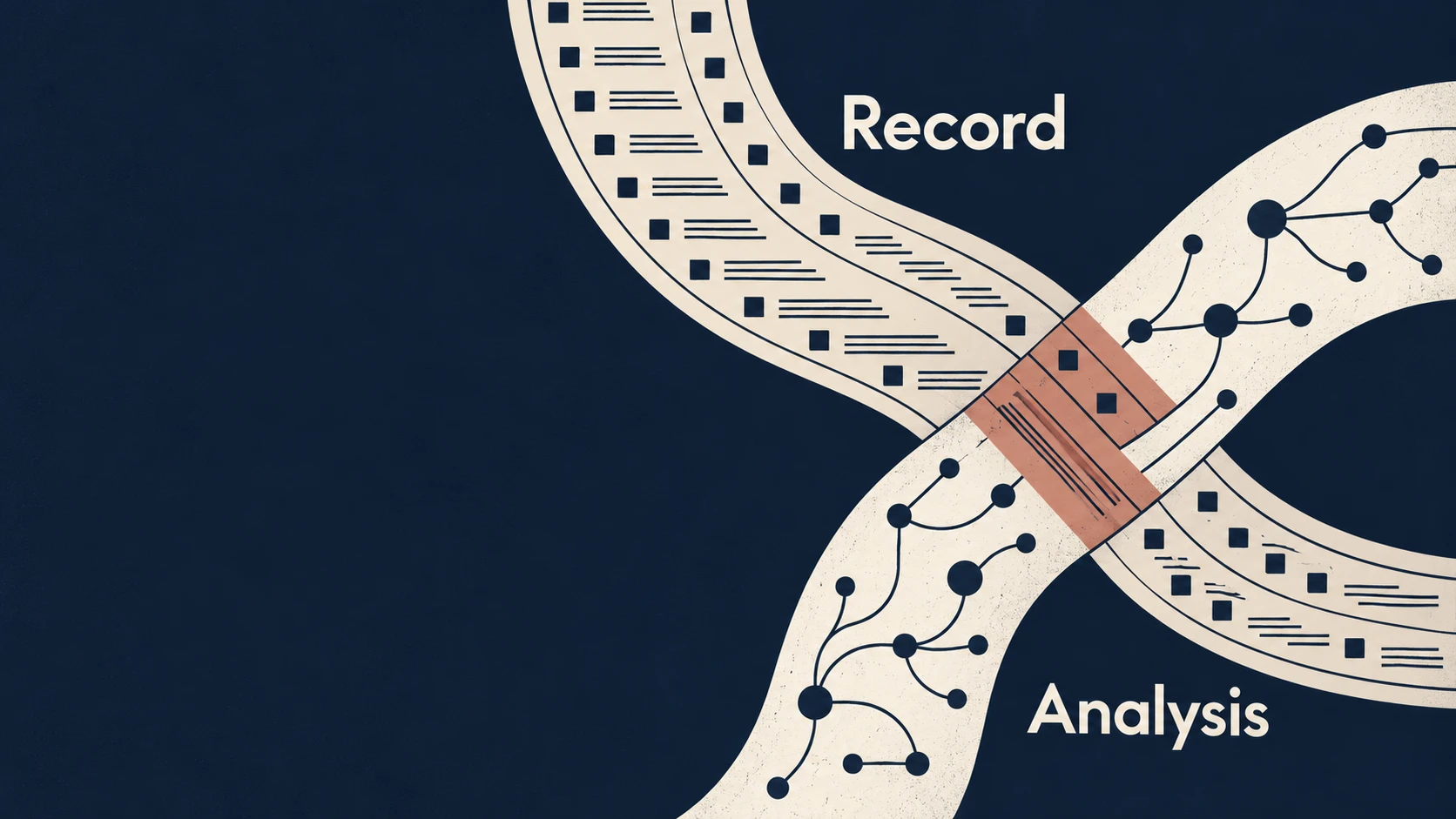
eDiscovery and case analysis answer connected questions. Discovery asks which information must be identified, preserved, collected, reviewed and produced. Case analysis asks what the available record establishes, how accounts differ and what the team needs to investigate or do next.
A platform may support both. The distinction helps a lawyer place the work and its controls; it does not divide a matter into two clean stages. Analysis can begin while collection and review are still underway.
This article explains the workflow relationship, the handoff between systems and the questions to ask before adding another tool. Discovery obligations still depend on the matter's court and jurisdiction.
What eDiscovery covers
The current EDRM model, released in September 2026, includes acquiring data, reviewing it, producing material and managing its retention, transfer or disposal after use. Analysis continues across that lifecycle. Teams can repeat or revisit steps as their understanding develops. 1
For a legal team, discovery work can include identifying relevant sources, preserving records, processing collected files, assessing responsiveness and privilege, applying redactions and delivering a production in the required format. The controls depend on the matter, applicable rules and the systems used.
The work may also reveal patterns, important dates, disputed accounts and gaps in the collection. Case strategy can develop during that process. An eDiscovery platform may have chronology, narrative and drafting features as well as review tools. Check the actual product rather than assuming those capabilities are absent.
What case analysis covers
Case analysis is the work of building and testing an understanding of the matter. It connects particular questions to the documents, accounts and other material that bear on them.
Typical outputs include:
- A chronology of relevant events, with references to the supporting records.
- An issue-based evidence matrix showing support, contrary material and gaps.
- A factual brief that separates established points, competing accounts and open questions.
- A witness outline organised around the matters the lawyer needs to explore.
- A draft that makes clear which factual propositions the team is relying on.
Each output requires judgments about scope and meaning. A document may show that someone made a statement without proving the statement itself. An apparent gap may reflect an incomplete collection. A chronology can record an event while leaving its legal significance unresolved.
The evidence-matrix guide explains how to preserve those distinctions in a working record.
Use the question to decide where the work belongs
If the immediate question is whether a document belongs in a production, use the discovery workflow and its review controls. If the question is how several documents bear on a proposition, use the analysis workflow that lets the reviewer inspect that relationship.
The same email can matter to both jobs. Its review status may govern whether it can be produced. Its wording may also qualify an allegation in the team's factual brief. Neither decision automatically settles the other.
Avoid treating a summary label as a substitute for the underlying decision. A document marked relevant does not necessarily support the proposition beside it. A document omitted from one working brief does not necessarily fall outside the discovery scope.
A fictional example: the disputed notice
Suppose a commercial dispute turns on whether a notice was sent and received. The packet contains a sent email, a delivery failure message, a later email referring to a telephone call and part of the agreement. This is a fictional example, not a legal finding or product test.
Discovery work asks whether the relevant mailboxes and attachments were collected, whether the records are complete and how each document should be reviewed and handled. Case analysis asks what the packet says about sending, receipt and the reported call.
Keep those events separate. The sent email supports that a message was sent from the recorded account. The failure message raises a question about delivery. The later email records someone's account of a call. The partial agreement leaves a further question about the complete notice provision.
A useful factual brief records each proposition, its source and the next check. It leaves the legal effect of the notice for assessment against the complete agreement and relevant law. Finding more material may require the team to return to collection or discovery review.
Preserve the source when work moves between systems
Before moving an approved set of records into another tool, agree what the receiving workspace needs and who may access it. Keep a register of the transferred material and preserve identifiers that let the team return to the original record.
Check:
- Document IDs and any production or Bates references used in the matter.
- Native files, rendered copies, extracted text and the relationship between them.
- Attachments and email-family relationships that affect meaning.
- Version information, collection gaps and processing problems.
- Access restrictions and the permitted use of privileged or confidential material.
- The location of the original reviewed record and the owner of later corrections.
A text extract may omit formatting or attachments that change the meaning. Page references may also differ between file versions. Verify that each link opens the source the reviewer expects.
Transferring documents does not establish that the receiving system is approved for them. Obtain the firm's required data-use approval before transfer. If a record is withheld or restricted, make the analysis limitation visible without disclosing the restricted content.
Integrations need the same checks
Harvey and Everlaw announced a partnership in September 2026 to connect discovery evidence with Harvey's workflows. The announcement described expected fall availability. It should be treated as an announcement, not proof of current access for a particular customer. 2
Whether work uses an integration or an export, ask the supplier to show the behaviour that matters: which version is read, which permissions apply, how a citation returns to the source and what happens when the record changes.
An integration can reduce movement between screens. It does not by itself establish collection completeness, legal accuracy or that every derived draft will refresh.
Know where Grella fits
Grella is a Legal Matter Workspace for organising and working from the matter record. Its focus is connecting source documents to facts, people, issues, chronologies, cited answers and work products.
Grella does not replace legal hold, privilege review, redaction or discovery production. Its Tabular Review is a way to apply questions across selected documents and inspect the answers. The existence of a review table does not make it a discovery production system.
The practical question is whether the team needs a better way to use the approved record across factual work. Evaluate the features, release availability and data-use requirements for the work you intend to do.
Keep the relationship visible as the matter changes
Assign an owner to new material and source corrections. Record which factual outputs may need review, while retaining the separate discovery decisions and their history. Revisit collection gaps when the analysis reveals a missing attachment or account.
For the next piece of work, use the source-linked brief guide. For later records, use the new-document review guide. Both help the team return from a working conclusion to the material behind it.